AI for Single-Family Rental Operations
AI for Single-Family Rental Operations
Domos Team | 8 min read | Updated June 2026
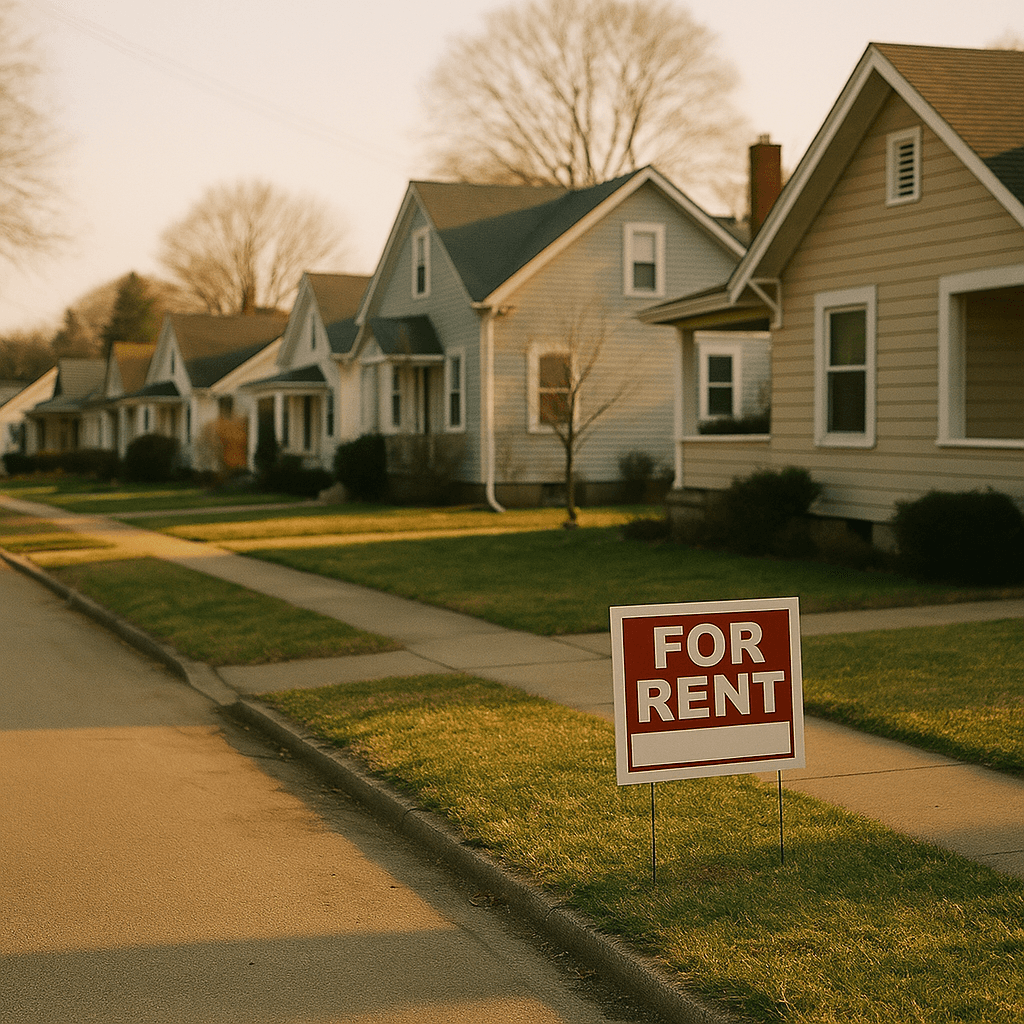
Single-family rental is the second-largest rental category in the country, and the hardest to run. The homes are not stacked in one building with one office. They are scattered across neighborhoods and metros: ten homes here, forty there, a few in a market three states away. Every one needs the same leasing, maintenance, collections, and resident care as an apartment community, except there is no leasing desk down the hall and no maintenance shop on site.
Call it the scattered-site tax, the operational drag of running a portfolio that does not sit in one place. It gets paid in windshield time, in missed after-hours calls, in vendor coordination across dozens of zip codes, and in leads that go cold because no one was free to answer. It is the single biggest reason SFR margins leak.
This is the hub for running scattered-site SFR better. Below is every Domos resource on leasing, maintenance and turns, collections, and resident communication for single-family operators, organized so you can go straight to the play you need.
Key takeaways
Single-family rental is the second-largest rental category in the U.S., and fewer than 2% is owned by large institutions, so most operators are lean regional teams running scattered homes.
With acquisition under regulatory pressure and rents flat, operating efficiency, not buying more doors, is where returns now come from.
The two workflows where AI pays off fastest in SFR are leasing response and maintenance triage, because both fall apart when there is no on-site office.
The real test of any SFR AI tool is whether it works two ways inside your existing PMS and resolves the job end to end, not whether it can open a ticket.
Start by automating your highest-cost workflow, prove it on a slice of the portfolio, then scale.
Where single-family rental operations break down today
The portfolio is dispersed, but the team is not. Homes spread across neighborhoods and markets still expect one consistent standard of service, and a lean back office cannot be everywhere at once.
There is no on-site office. A prospect drives by a sign or fills out a form at 8 p.m. With no leasing desk to call, the response depends on whether someone happens to be reachable. Slow answers lose the lease.
Coordination is the cost center. Turns, work orders, and vendor scheduling across scattered homes eat hours of phone tag and follow-up that never show up as a line item, yet quietly decide the month.
Why operations is the lever now
The way SFR makes money is shifting. Acquisition is under pressure: on January 20, 2026, a federal executive order directed agencies to curb large institutional investors from buying scattered-site single-family homes, with build-to-rent explicitly carved out (National Law Review). Rent growth has moderated. When you cannot reliably grow returns by buying more homes or raising rents, the remaining lever is running the portfolio you already have more efficiently.
And the operators who actually run SFR are not the institutions in the headlines. Single-family rentals make up roughly a third of all U.S. rental housing, the second-largest rental type in the country (Arbor / Chandan Economics), yet fewer than 2% of those homes are owned by large institutional investors. The vast majority belong to small and mid-size operators (National Law Review, citing CBRE). These are the teams paying the scattered-site tax with the least margin to spare, and the ones with the most to gain from automating the repetitive work.
That is where an AI workforce fits. Not another dashboard, but a layer inside the systems you already run that handles the volume a dispersed portfolio generates.
What changes with an AI operations layer
The gap between a traditional scattered-site operation and one with an AI layer is widest exactly where SFR is hardest: after hours, across markets, and on the first response.
Workflow | Traditional scattered-site | With an AI operations layer |
|---|---|---|
Lead response | Hours, or the next business day when no one is at a desk | Every inquiry answered within 5 minutes, 24/7 |
Leasing outcome | Lead-to-lease averages about 8.7% | Roughly 60% faster lead-to-lease with instant response and follow-up |
After-hours maintenance | Voicemail until morning | Instant intake, triage, and routing at any hour |
Rent collection | Reminders go out when someone remembers | The same sequence every cycle, delinquency cut up to 80% |
Coverage as you grow | One coordinator per region, cost rises with every door | About 90% of interactions handled without a person |
Lead-to-lease benchmark from DoorLoop; response time, delinquency reduction, and share handled autonomously are Domos platform figures.
Leasing across scattered sites
In SFR, speed is the whole game. A single home draws fewer leads than an apartment community, so each one matters more, and there is no front desk to catch the inquiry. The lead comes in from a listing, a yard sign, or a text at night, and the first responder usually wins.
Domos answers every leasing inquiry the moment it arrives, within 5 minutes, 24/7, across phone, text, email, and chat. It qualifies the prospect, answers questions about the specific home, and books the showing without waiting for someone to be free. One centralized leasing layer covers every home in the portfolio, no matter the market.
Start here:
How to Centralize Leasing Across a Scattered-Site SFR Portfolio
Can AI Replace Call Centers for Property Management in 2026?
Maintenance and turns across a dispersed portfolio
Maintenance is where the scattered-site tax bites hardest. A work order at one home, a turn at another, a vendor who only covers half your markets -- the repair is rarely the problem. The coordination is. And a slow maintenance response is one of the most common reasons a resident stops renewing.
Domos handles intake around the clock, turns a resident’s photo into a documented work order, routes it, and keeps everyone updated -- so a 10 p.m. request in one market does not wait until someone is back at a desk in another. The same engine keeps turns moving between residents, when empty days cost the most.
With Domos, you can expect resolution time to decrease by up to 48 hours.
Start here:
Managing Maintenance and Turns Across a Scattered-Site SFR Portfolio
How to Improve Maintenance Automation in Property Management
How to Handle After-Hours Coverage and Maintenance Emergencies
Collections and resident communication
Rent has to arrive on time from homes spread across the map, and residents expect an answer now, in their channel, in their language, whether or not anyone is in the office. Collections is a communication problem before it is a payment problem: most late rent is friction and forgetfulness, not refusal. Domos runs the same reminder and follow-up sequence every cycle, inside your PMS, which is how operators cut delinquency up to 80%, and answers routine resident questions instantly in English and Spanish.
Start here:
Growth: build-to-rent and operating leverage
Two forces are reshaping how SFR portfolios grow. Build-to-rent, meaning purpose-built rental communities, is the fastest-rising and most policy-favored slice of the sector, and its make-or-break moment is lease-up. And as acquisition tightens, the operators who win grow returns by adding doors faster than cost: operating leverage, not headcount.
Start here:
The market and regulatory backdrop
SFR strategy is being rewritten in real time, by policy, by softening rents, and by the shift from buying growth to operating for it. These pieces track what it means for operators.
Start here:
How to choose an AI solution for single-family rental
There is no single best tool, only the one that fits your highest-cost workflow and the systems you already run. A useful rule: automate the workflow that costs you the most first, usually maintenance or leasing response, prove it on a slice of the portfolio, then scale.
Before you buy, ask any vendor:
Does it sync two ways with your PMS, writing work orders, ledger notes, and lead updates back automatically, or does it just create a ticket you still have to work?
Does it resolve the whole workflow, from intake through follow-up, or only acknowledge the request and hand it back?
Does it cover voice, text, and email, and does it work in your residents’ language?
Is there a human-in-the-loop layer reviewing quality, and a clear handoff to your team for legal or emotional situations?
Where is resident data stored, and is any leasing or screening step run on fair, bias-free criteria?
Is it configured to your policies, fee schedules, and per-market rules, or is it a generic script?
Domos is built to answer yes to each. It runs inside your PMS with two-way sync, resolves work end to end, covers phone, text, email, and chat in English and Spanish, keeps a specialist review layer plus routing to your team, and is configured to your operation.
How it runs, inside your PMS
One principle ties it together. Domos is a layer inside the systems you already use, not another platform to log into. It reads from and writes to your PMS, so every lead, work order, and payment across every home lands in one source of truth, the closest thing a scattered-site portfolio has to a single front desk.
It is configured to your operation across hundreds of parameters: your fee schedules, your notice timing, your escalation rules, your tone, your per-market rules. So it follows your policies, not a generic script. It handles the repetitive volume on its own, about 90% of interactions. A Domos specialist reviews roughly 10% of flagged conversations for quality, a human-in-the-loop layer not every tool offers. And about 20% of conversations, the ones that need a judgment call, route straight to your team.
It replaces some of the repetitive work, not your people. Your team stays for the relationships and the decisions that need a human, and the scattered-site grind runs itself. If you are still deciding what to look for, the Property Management AI Glossary defines the terms in plain language.
The bottom line
You cannot put a leasing desk in every neighborhood. But you can put one consistent layer across all of them. As acquisition tightens and rents flatten, the SFR operators who protect returns will not be the ones with the most doors. They will be the ones who answer every lead in five minutes, keep turns and work orders moving across every market, and run collections the same way every month. That is workflow, not headcount.
Frequently asked questions
What is AI for single-family rental? It is software that automates the operational workload of a scattered portfolio, from answering leads and triaging maintenance to running collections, by working inside your existing PMS rather than as a separate tool. It matters most in SFR because there is no on-site office to absorb that work.
Which workflow should I automate first? The one costing you the most, which for most SFR operators is after-hours maintenance or slow leasing response. Prove it on part of the portfolio, then expand.
Does it integrate with my property management system? It should, and two ways. The test of a real SFR AI tool is whether it writes work orders, notes, and lead updates back into your PMS automatically, not just whether it can hold a conversation.
What makes single-family rental harder to operate than multifamily? The homes are geographically dispersed with no on-site office, so leasing, maintenance, and resident communication that an apartment community handles from one location must be coordinated remotely across many addresses and often multiple markets.
Can AI manage a scattered-site SFR portfolio? Yes. Domos provides one centralized layer that handles leasing inquiries, maintenance intake, collections, and resident messages across every home, around the clock, inside your existing PMS, so nothing is tied to a single office.
Do I need a new platform? No. Domos runs inside your existing property management system, reading and writing to it directly. No new login, no migration, no retraining.
How fast does it respond to leads and residents? Within five minutes, 24/7, across phone, text, email, and chat, in English and Spanish. That matters most in SFR, where each home draws fewer leads and the first responder usually wins.
Will it replace my team? It replaces some of the repetitive work, such as after-hours intake, reminder sequences, and status updates, so a lean team can cover a dispersed portfolio. People stay for relationships, judgment, and the calls that need a human.
Want to see what one consistent layer across every home would do for your portfolio?