Build-to-Rent Operations: How AI Runs Lease-Up and Resident Care at Scale
Build-to-Rent Operations: How AI Runs Lease-Up and Resident Care at Scale
Domos Team | 7 min read | Updated May 2026
Build-to-rent has gone from niche to a structural part of the housing market. As the single-family rental sector matured, purpose-built rental communities became a key source of new supply. And unlike scattered-site SFR, build-to-rent is the slice of the market policy is encouraging, not curbing.
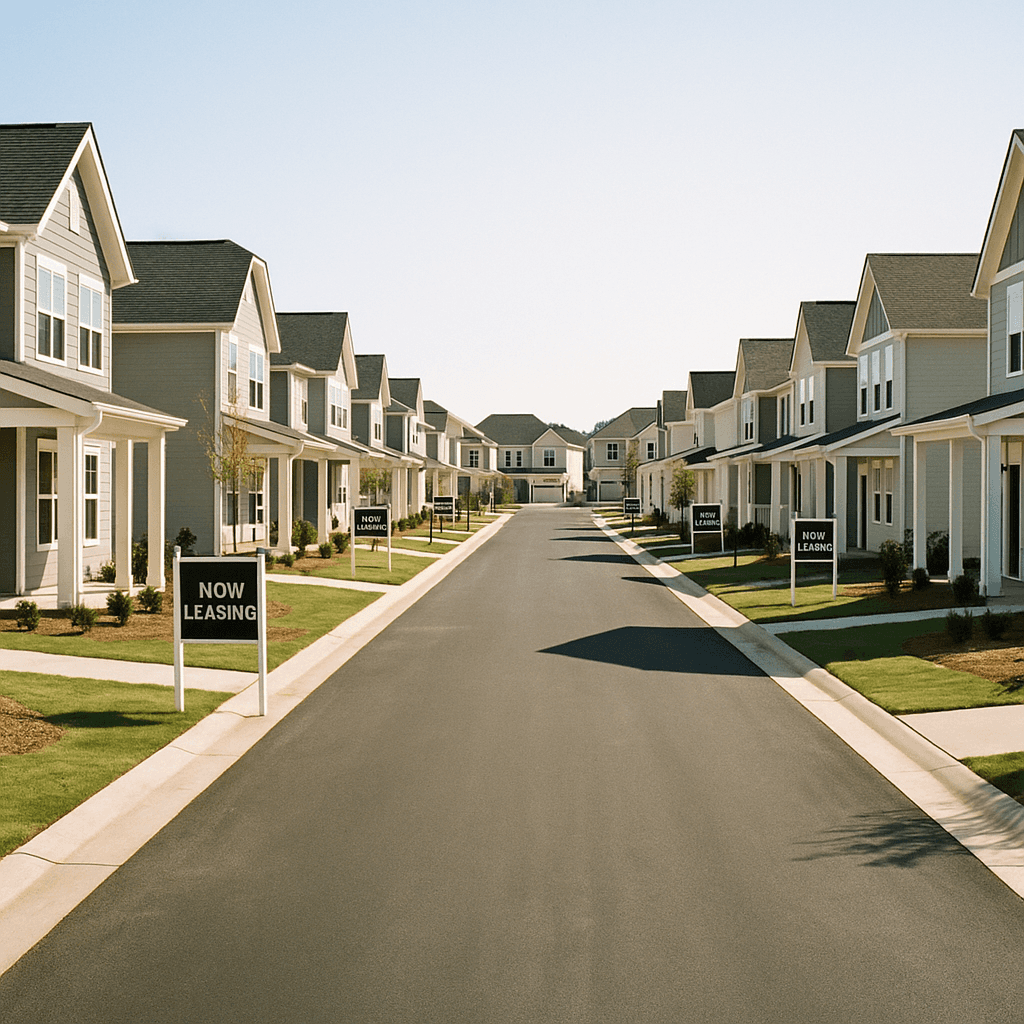
That creates a specific operational moment. A build-to-rent community does not lease up one home at a time over years. It delivers dozens of homes at once and has to fill them fast. Lease-up is the test. Every day a finished home sits empty before stabilization is pure loss, and the lead volume during lease-up is more than a small team can answer by hand.
Here is how an AI workforce handles the build-to-rent surge, then keeps the community running once it stabilizes.
Build-to-rent is growing, and the rules favor it
The scale is real. SFR and build-to-rent construction totaled roughly 68,000 starts in the year ending December 2025, and build-to-rent accounted for 7.2% of all single-family construction starts, above its five-year average and a level the sector had never reached before 2022 (Arbor / Chandan Economics).
It is also the favored path. The January 2026 executive order aimed at large institutional buyers of scattered-site homes explicitly carved out build-to-rent, and the housing bill advancing in Congress added broader carve-outs for purpose-built rental (National Law Review). For operators, that means more build-to-rent communities coming online, and more lease-ups to run.
Why lease-up is the build-to-rent test
Scattered SFR leaks margin slowly, one vacant home at a time. Build-to-rent concentrates the risk. A community delivers in phases, and a whole block of homes needs residents at once. Miss the lead volume and the lease-up timeline slips, which is the difference between hitting stabilization on schedule and carrying empty homes against a construction loan.
The challenge is not just speed. It is surge capacity. During lease-up, inquiries spike well above what the eventual steady-state team is sized for. Staffing up for the peak and back down after is expensive and clumsy.
Absorb the lease-up surge
An AI leasing layer gives a build-to-rent community surge capacity on demand. It answers every inquiry the moment it arrives, within 5 minutes, 24/7, across phone, text, email, and chat, qualifying prospects, answering questions about floor plans and availability, and booking tours without a lead ever waiting for a callback. Whether ten inquiries come in today or two hundred, the response is the same. Operators that automate this see lead-to-lease move roughly 60% faster, exactly the lever a lease-up timeline depends on.
Then run the community
Lease-up ends. Operations do not. Once a build-to-rent community stabilizes, the work becomes the same recurring grind as any rental community, from rent collection to maintenance to renewals to resident communication, and the same layer carries it. Domos runs reminder and follow-up sequences that cut delinquency up to 80%, handles maintenance intake around the clock, and answers residents instantly in English and Spanish, all inside your existing PMS.
What this means for operators
Build-to-rent's advantage is concentration: homes clustered in one community rather than scattered across a metro. That makes centralized, automated operations an even more natural fit. One layer covers the whole community for leasing, maintenance, and resident care, while your team stays on site for the relationships and judgment calls that close leases and keep residents. The routine runs itself, and the people handle the exceptional.
The bottom line
In build-to-rent, lease-up is won or lost on response capacity, and stabilized performance is won on consistency. An AI workforce delivers both: surge capacity during lease-up, steady operations after, without staffing up for the peak and without adding platforms or people. As more build-to-rent communities come online, that is how operators hit stabilization on schedule and keep it there.
See the single-family rental operations hub for the full set of SFR and build-to-rent plays, and Trump's SFR Buying Ban Threat: What Changes Now for the policy backdrop.
Frequently asked questions
What is build-to-rent (BTR)? Build-to-rent refers to homes and communities developed specifically to be rented rather than sold, often clustered as a managed community of single-family homes. It has become a major source of new rental supply and is treated more favorably in recent housing policy than scattered-site acquisition.
How is build-to-rent property management different from scattered-site SFR? Build-to-rent concentrates homes in one community, so operations are less about covering a dispersed map and more about handling lease-up volume and running a community at scale. Both benefit from centralized, automated leasing and resident operations.
How does AI help with build-to-rent lease-up? It provides surge capacity: instant, 24/7 response to a spike in inquiries, qualifying prospects and booking tours so the lease-up timeline does not slip, without staffing up for the peak and back down afterward.
Does an AI layer keep working after lease-up? Yes. The same layer that absorbs lease-up then runs ongoing operations, from collections to maintenance intake to renewals to resident communication, inside your existing PMS.
Running a lease-up soon? See what instant response across every inquiry would do for your timeline.
Not ready? Start with the single-family rental operations hub.