How to Reduce Tenant Turnover with Automated Communications
Tenant turnover is expensive. Between vacancy loss, marketing spend, and staff time, replacing a resident can easily cost several thousand dollars per unit. Yet, most property teams still treat retention as something that happens at renewal time rather than something built through every interaction.
Reducing turnover starts with communication, not at lease end, but every day before it. And automation is what makes that level of consistency possible at scale.
Why Communication Drives Retention
Residents don’t leave just because rent increases. They leave because they feel unheard or uncertain. They wait too long for updates on maintenance. They get reminders too late. They’re not sure who to contact when something goes wrong.
The most successful operators use communication to create predictability and trust. Automated systems make sure no message goes unsent, no request is lost, and every resident receives timely, accurate information. Over time, that consistency becomes retention.
Step 1: Acknowledge Every Request Immediately
When a resident submits a maintenance request or sends a question, time is everything. Even a short delay can make an issue feel ignored.
AI-driven communication can acknowledge receipt instantly, confirm the details, and provide next steps. For example:
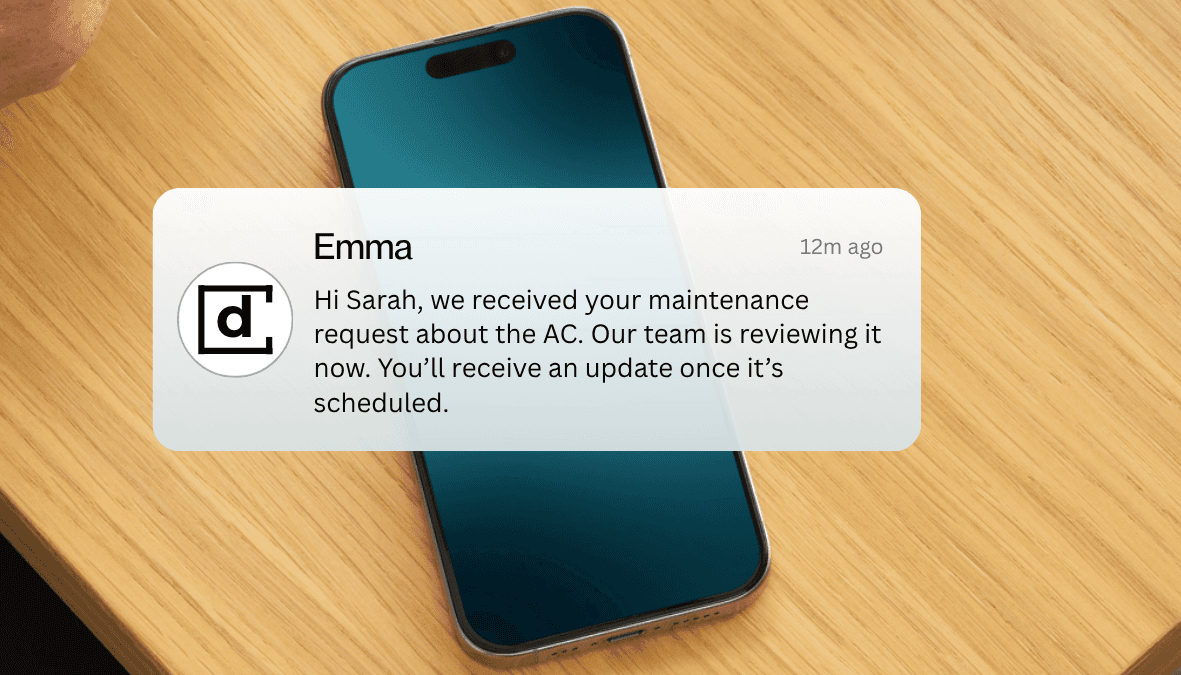
“Hi Sarah, we received your maintenance request about the AC. Our team is reviewing it now. You’ll receive an update once it’s scheduled.”
This kind of immediate feedback costs nothing but builds trust at scale, especially across large portfolios.
Step 2: Automate Maintenance Updates
Maintenance communication is one of the top drivers of dissatisfaction. Residents often feel left in the dark between submitting a request and seeing someone arrive.
Automating this process ensures they know what’s happening at every stage. The system can confirm that a request was logged, ask for access permission, or verify when the resident is available.
AI also recognizes urgent issues like leaks or outages, and automatically routes them to the right team while providing residents with the correct emergency steps to take.
When updates are consistent, transparency becomes part of the resident experience.
Step 3: Schedule Proactive Rent and Renewal Reminders
Late payments and missed renewals often come down to poor timing, not intent. Automated reminders prevent both.
AI can send gentle, personalized reminders before the due date, follow up after missed payments, and escalate when necessary. For renewals, the system can start communication 60 to 90 days before expiration, leaving enough time to negotiate, adjust terms, or offer renewal incentives.
These workflows run directly within your PMS, so every message is logged and every outcome traceable. The result is fewer delinquencies and higher renewal rates.
Step 4: Keep Residents Informed with Regular Updates
Automation isn’t only about reactive communication. It’s also a way to build community engagement.
Monthly updates on events, scheduled maintenance, or seasonal reminders create a sense of connection. Even small touches like reminding residents about HVAC filter changes or pest control visits show organization and care.
Consistent outreach keeps residents informed and reduces frustration before it ever builds.
Step 5: Combine Automation with Human Oversight
Automation should handle the routine, not replace the human connection.
When AI systems detect recurring complaints, delayed responses, or unusual sentiment, they can alert staff to intervene personally. That combination of automated consistency and human empathy produces the best retention outcomes.
The Real Advantage: Predictability and Trust
When residents know their requests will be answered, payments will be acknowledged, and renewals will arrive on time, they stay longer. That stability compounds across portfolios, creating smoother operations, higher NOI, and stronger brand reputation.
Ready to keep your residents longer?